Why we are all going crazy for Christopher Nolan’s THE Odyssey!
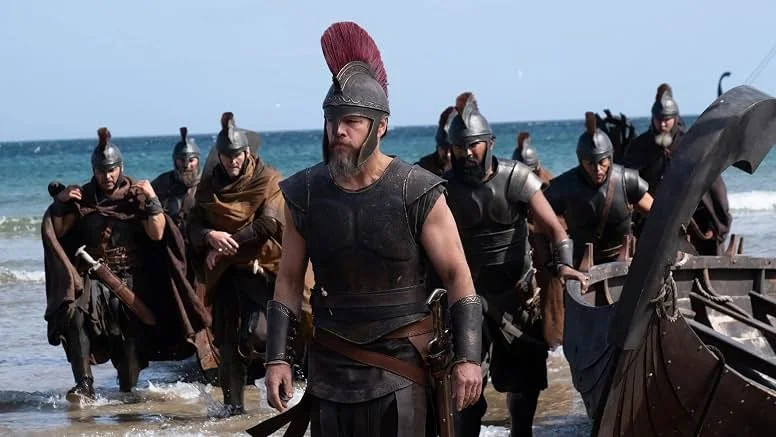
The most talked about film of the year. One of the oldest literary texts ever written. Tickets on sale a year before release date. The world is going crazy for Christopher Nolan’s The Odyssey and well, should we be?
I have been genuinely excited for this film for a couple of years after reading quite a few books that retell Greek myths from the perspective of it’s female protagonists. And after figuring out what version to watch (obviously missing the IMAX 70mm print as only three cinemas in the country were showing it!). Personally I was gutted to not see the 4:3 (or thereabouts) aspect ratio as I would love to see the full frame as intended. If you have no idea what I’m talking about this guide might help you! Anyway, I opted for a 70mm print at London’s Picturehouse Central on a late summer afternoon. NOTE: I actually cancelled my Leicester Square Odeon ticket after my (cinematographer) husband said the projection was terrible with lots of flickering. Lol
I think it’s important to remind ourselves before we watch a film based on mythic material is that these stories were created around oral traditions and out of sharing around fires for hundreds of years. Not written by one person but many people and often difficult to trace back to the real source even if someone is credited as writing them, like Homer. They are democratic, not written for propaganda or with an agenda, but rise out of the every day, a collective expression of what being human is really about. This is why maybe there is so much interest in this epic and why these stories outlast all the empires that have come and gone since they were written.
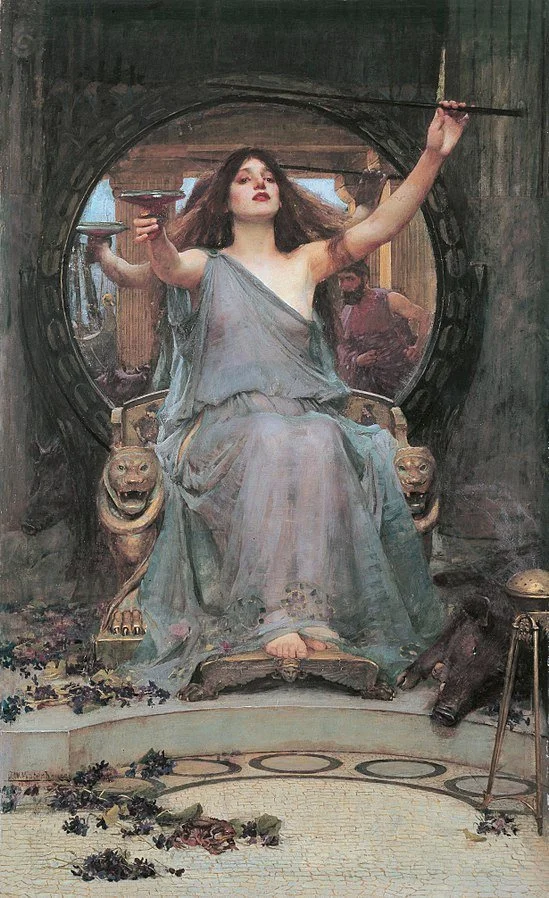
Mythic material is a very specific type of storytelling. I have been forever interested in fairytales and the power of myth and their importance for our inner psyche (see reading list below) and even based a research project many years ago on how these old stories are an important for children’s psychological development. This lead me into a very keen interest in archetypes, mythology and symbolism. Nowadays we use the world myth to mean that something is a lie. But this is a total misuse of the word. Myth, according to Richard Rohr, means something that is always true. Something about the human condition that spans all space and time.
“Myth, according to Richard Rohr, means something that is always true.”
Nowadays, stories are reduced to mere entertainment. But growing up watching films and ballets and devouring fairytales, I knew these were providing much more than mere escapism. I now realise that they are key to our moral development and a means by which we learn about the world, other people and most importantly for The Odyssey, ourselves. Going into the film with this knowledge I think really enhances the viewing beyond the man, the surreal monsters and into a more collective unconscious dream that feels realer than real…
What I absolutely loved
A great film is the sum of all it’s good components. In The Odyssey, the music was one of the stand out components of the film for me. Knowing that Nolan wanted to avoid the romantic orchestration of 60s Harry Hausen classic epics, the composer Ludiwg Göransson opted to reconstruct historical instruments like the ancient Greek aulos (a double-piped wind instrument) and early lyres. He utilised gongs , struck metallic scrap objects, as well as synthesizers (yay!), and intimate polyphonic traditional vocals rather than sweeping symphonic crescendos which transports the audience to a different time and realm as well as make the story even more intimate. The sound was loud (some people advised ear buds) which really added to the horror of the journey which was something that never really landed for me before. The score elevates and carefully takes you on the swells of the emotion arc of the narrative and had me gasping, crying and squirming all the way through.
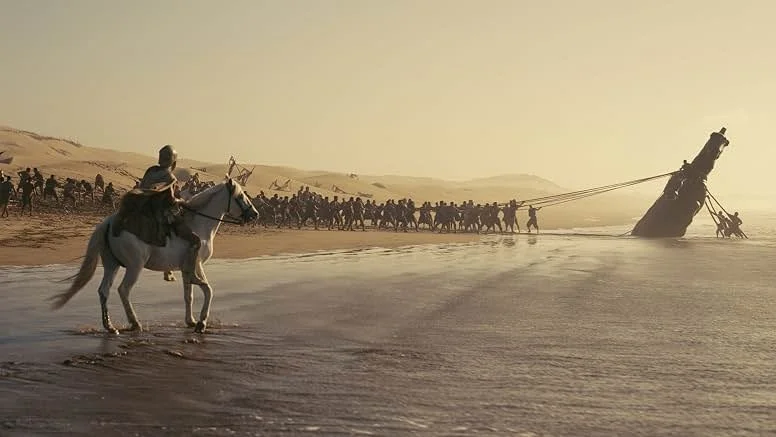
The casting on the Odyssey was on point too. No one was weak. The power and passion of Penelope. The nuanced restraint of Matt Damon apart from the Sirens which was a stunning scene. The desperation of Circe. Sinon in Hades (what a moment). All stand out moments for me. I’d love to have seen more of Helen of Troy but her moments were brilliant and hard-hitting. Her head turn over dinner a memorable moment for sure. The cast gave some memorable interviews throughout their press tour and you could see their admiration of the filmmaking prowess of Nolan from his epic sets to his continual presence on set. The actors seemed to unveil their characters in each other and find gravitas in the text themselves. This commitment to the process is something that always marks a compelling watch.
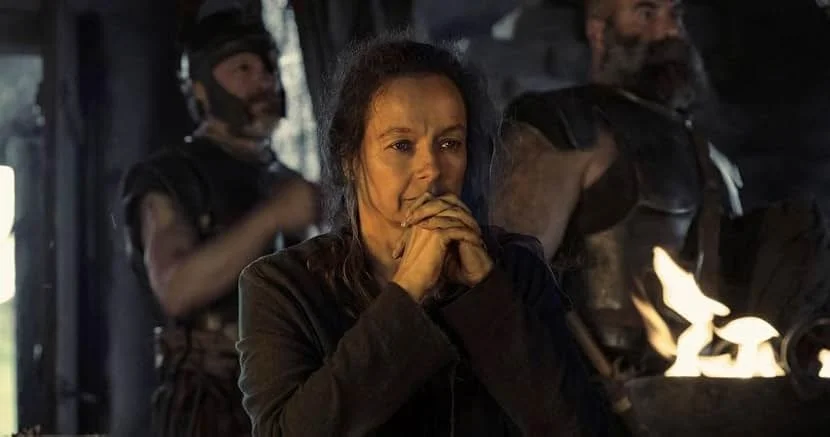
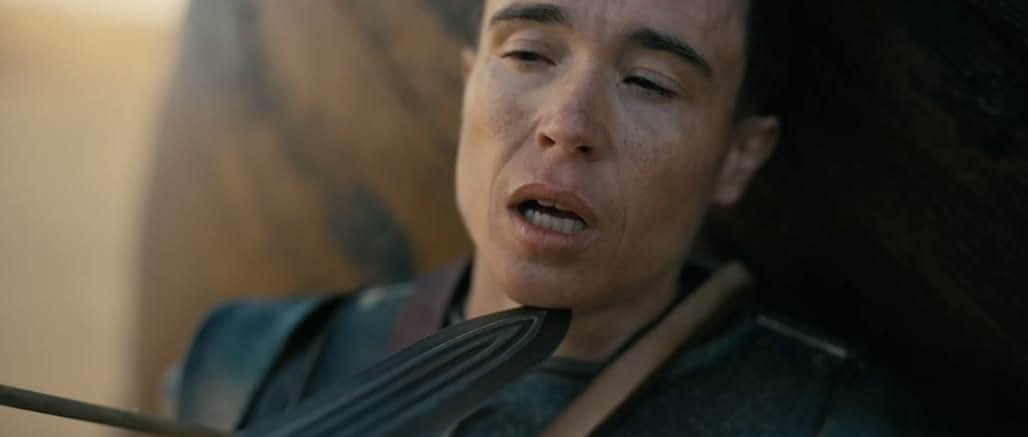
Nolan’s emotional motivation pulls the story onwards and helps it makes sense too despite the jumping around time (what Nolan film doesn’t have this)! We are caught up in Odysseus’s remembering and hauled along with him as he recounts the monster encounters and all the men he lost along the way. But most of all we sit with him grappling with the horrors of war. This was real and scary and gave agency to the innocents who were massacred. And here is where the women of Greek Mythology bring a a great alternative and important perspective and why we need the female gaze in a man’s story. A Thousand Ships by Natalie Hayne is a great book to get you started with a look at all the women affected by the Trojan War, including Penelope who is waiting impatiently for Odysseus to return, her thoughts and feeling portrayed through letters to her lost husband throughout the years.
What I wasn’t all the keen on
For me, the cinematography was just okay. The lighting was nothing special. It felt very documentary in style, spare the frame rate. It was natural, not aesthetic or stylised. But maybe this doesn’t really matter. Maybe it made the story more raw and real. I did love the lenses and the intimacy we felt to the characters as they spoke and the pull out to the impressive locations. And although it was probably because of the cumbersome IMAX cameras that made the camera float in and out of focus on faces, it didn’t bother me all that much. (It did bother a lot of focus pullers!)
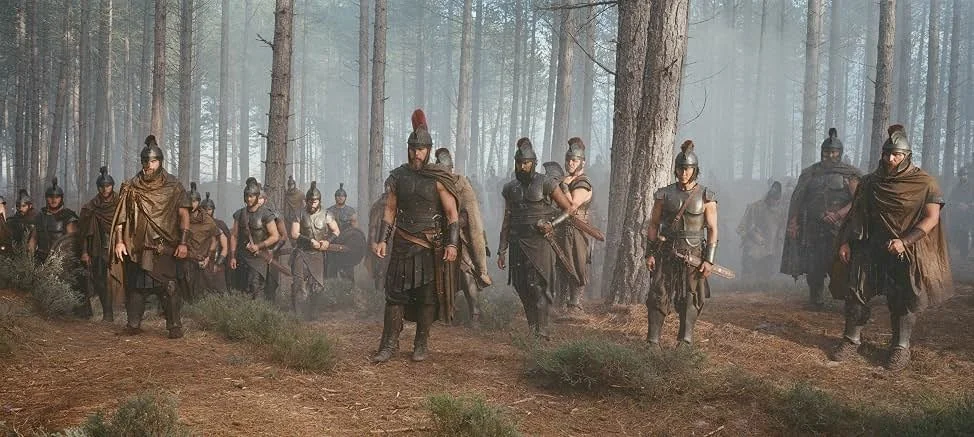
Could the film have been a little shorter? It’s not that I was bored and was sad when it ended, but the fight scene at the the end which was probably one my least favourite scenes could have been more succinct. The Odyssey has also been criticised for not including the eroticism and humour from the original text but in Nolan’s defence, I’m not sure that would have made this a stronger film. It may have watered the intention and intensity.
I also wasn’t a huge fan of the dialogue and the American accents. I did get used to it but I think hearing Telemachus speak about his ‘dad’ ripped me out of the ancient mythic world. I don’t think this was a lazy choice by Nolan and I’m sure he had his reasons but prominent classicist and translator Emily Wilson has stated that she "would be ashamed to have written any part of this script," dismissing the blockbuster as a superficial spectacle lacking emotional depth. I agree in part, I think the dialogue and script could have done with a little work.
Going deeper
If we take the whole film as symbolic of a human’s inner journey we can really start to see Greek philosophy and psychology come to the fore. The whole premise of forgetting who you are, where you have come from and where home is the perpetual inner struggle. How do we come home to ourselves?
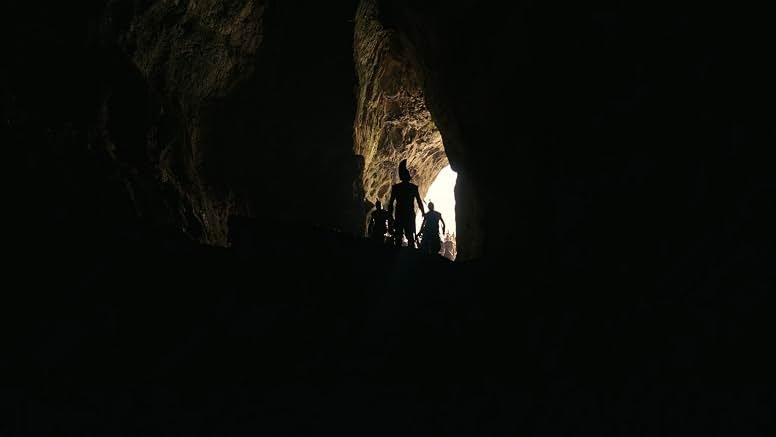
And what gets in our way? The giant ego that creeps up on us constantly. The cave we fear to enter of our deep unconscious. The animalistic greedy grotesque part of us that we refuse to acknowledge that consumes the world around us. Our unconscious bias towards the weak ‘other’ despite every religious test reminding us that the weak will be made strong and the first will be last. The distraction that makes us forget our true goals in life. Each monster and person that Odysseus met carries this deeper symbolism.
The siren scene was possibly the most powerful. The sound at this point was otherworldly as we see Odysseus trying to outsmart the gods once again. What he heard in that siren sound was not music or merely a beautiful song that drove every sailor mad, but sang directly to Odysseus about Odysseus. It didn’t sing anything new, but about what he had a lost, the raw pain of craving something you cannot have because it’s impossible or not good for you. A remarkable scene and one that tied the whole film together and let Matt Damon have his moment of full emotion.
“To be ourselves causes us to be exiled by many others, and yet to comply with what others want causes us to be exiled from ourselves.”
I just loved the thoughts and feelings this film left with me for days afterwards, where I kept pondering the symbolism for myself and for the world around me. That’s the mark of a great film, it staying with you and saying something that needs to be said to you.
Final thoughts
Those three notes of Ludiwg Göransson have been ringing in my head since I stepped out of the three-hour cinema journey. I couldn’t stop thinking about lengths one man will go to make things right, to grapple with the consequences of his choices and to really face your inner demons before surrendering to what is. Holding all this in mind will really enhance your viewing of The Odyssey.
I think this film has also whet our appetites for the female characters throughout Greek Mythology and maybe we can have a whole new genre emerge here. In the words of Bella Green, “Give me a film about Ariadne, Clytemnestra, Cassandra, Dido, Persophone… These women deserve to be main characters in their own stories, not merely props and plot devices in a male-centred narrative.” Maybe one of the many female directors we have discussed from our Female Film Club could take on the challenge.
Nolan also doesn’t shy away from making this tale current. The whole narrative revolves around the broken moral code (which we are collectively grappling with at the moment I would argue) and how that results in a much larger collapse of society. Human behaviour and selfish ambition doesn’t really change that much over the millennia and I think it was a clever move to bring that insight to the fore in this retelling of the Odyssey.
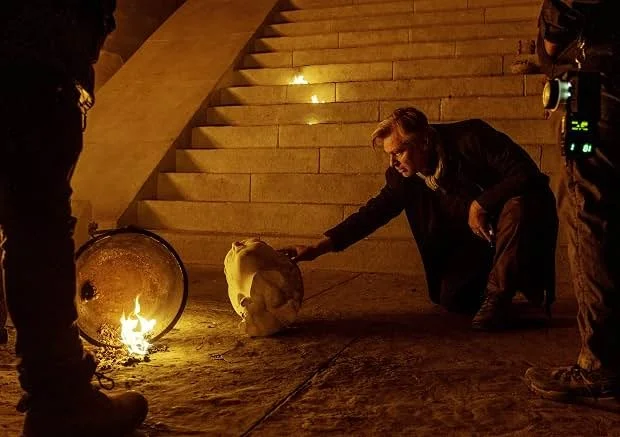
Bottom line, Nolan has got us all going back to the cinema and resurrected an ancient text. That along with his signature practical effects is a huge middle finger to this increasing age of AI! What a time to be alive when films like this are being made that we can talk about and sit with. Stories change us and maybe one like this can help us build a better world so our children can be writing and singing about our deeds in the decades that follow .

READING LIST
Here’s what to read straight away if you were dying to hear more about all the women in the story. There are many more to explore in this genre but these are the ones that have enhanced my understanding of Greek Mythology. Circe is one of the best around. A pretty life-changing read.
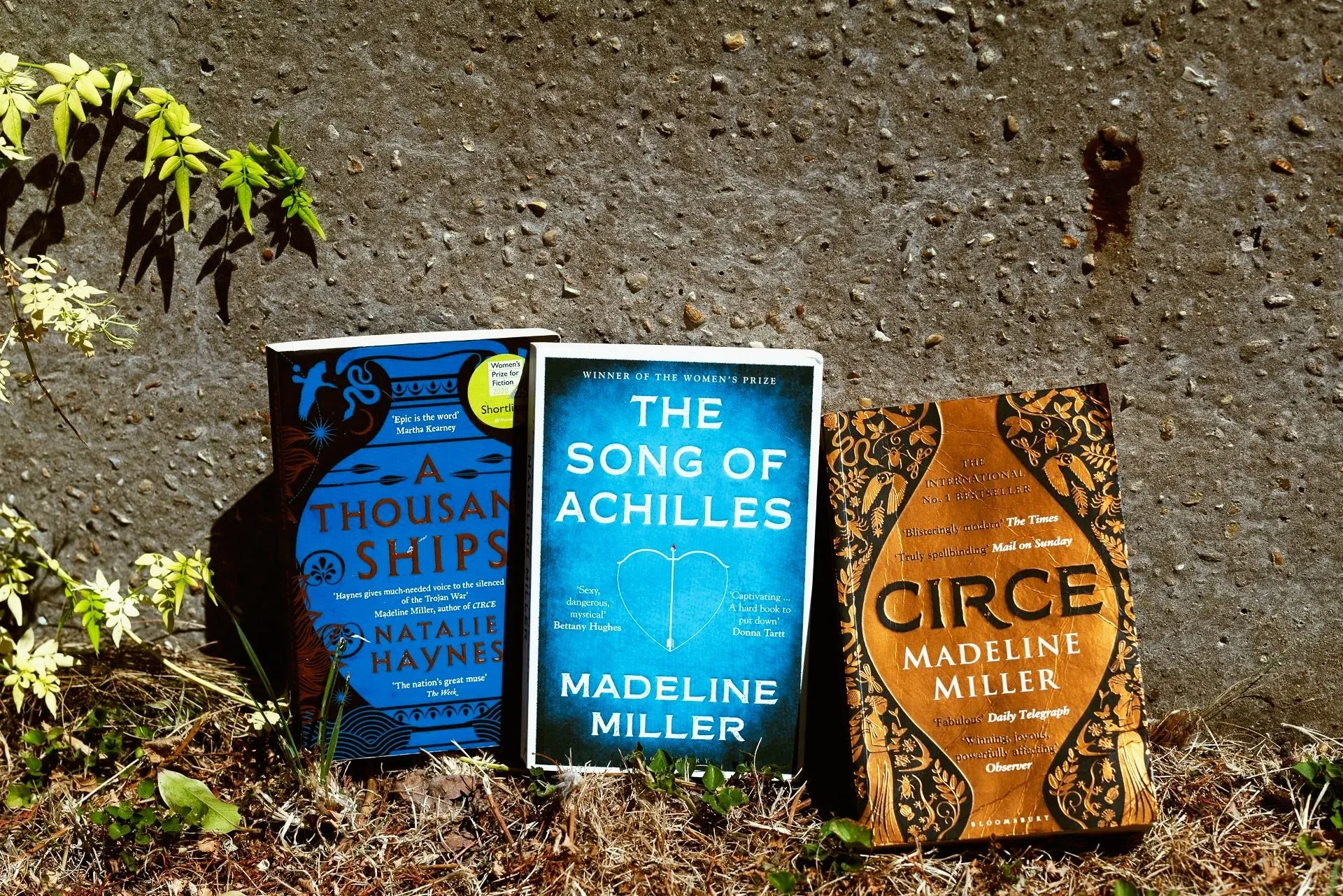
A Thousand Ships by Natalie Hayne
Circe by Madeline Miller
Song of Achilles by Madeline Miller
If you are interested in archetypes and myths in general then these are my go-to reads…
Care of the Soul by Thomas Moore
The Uses of Enchantment by Bruno Bettelheim
When Women Rose Rooted by Sharon Blackie
Women Who Run With the Wolves by Clarissa Pinkola Estés
Gossip of the Forest by Sara Maitland
Falling Upward by Richard Rohr
Hag: Forgotten Folktale Retold by various authors